I CONFIRM THAT THE WORK ATTACHED ASSESSMENT IS ALL MY OWN WORK AND DOES NOT INCLUDE ANY WORK COMPLETED BY ANYONE OTHER THAN MYSELF AND SOURCES HAVE BEEN APPROPRIATELY REFRENCED
NICOLAS TUFAILE FORSTMAN
1880’s Ancoats
The Bridge
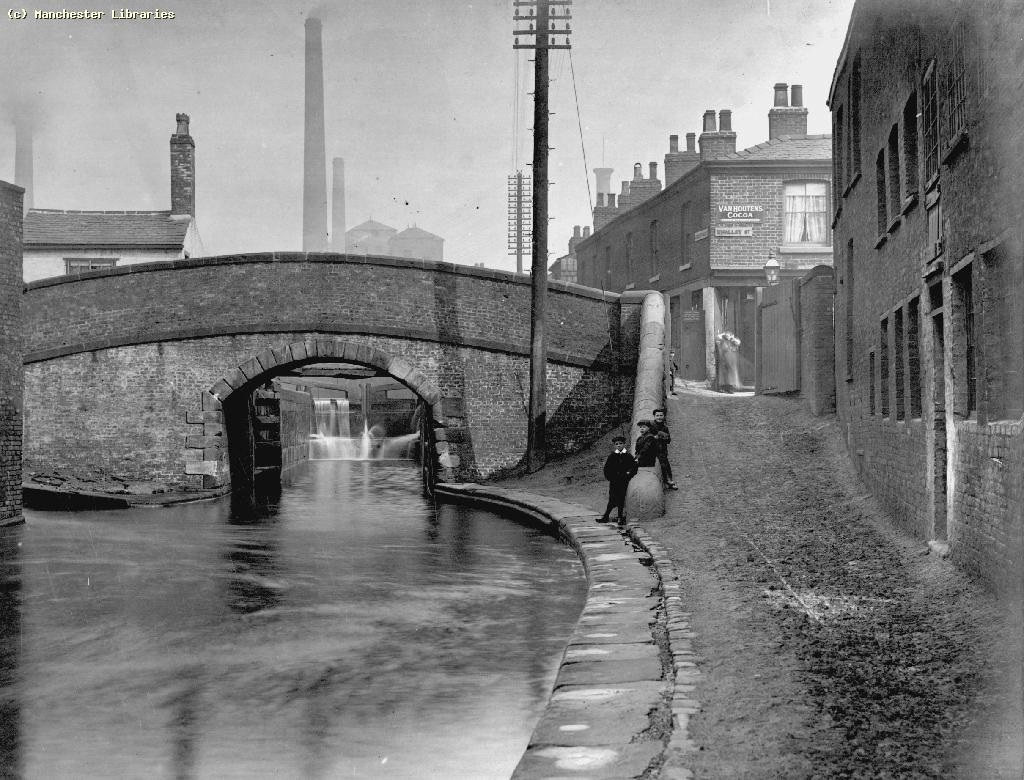
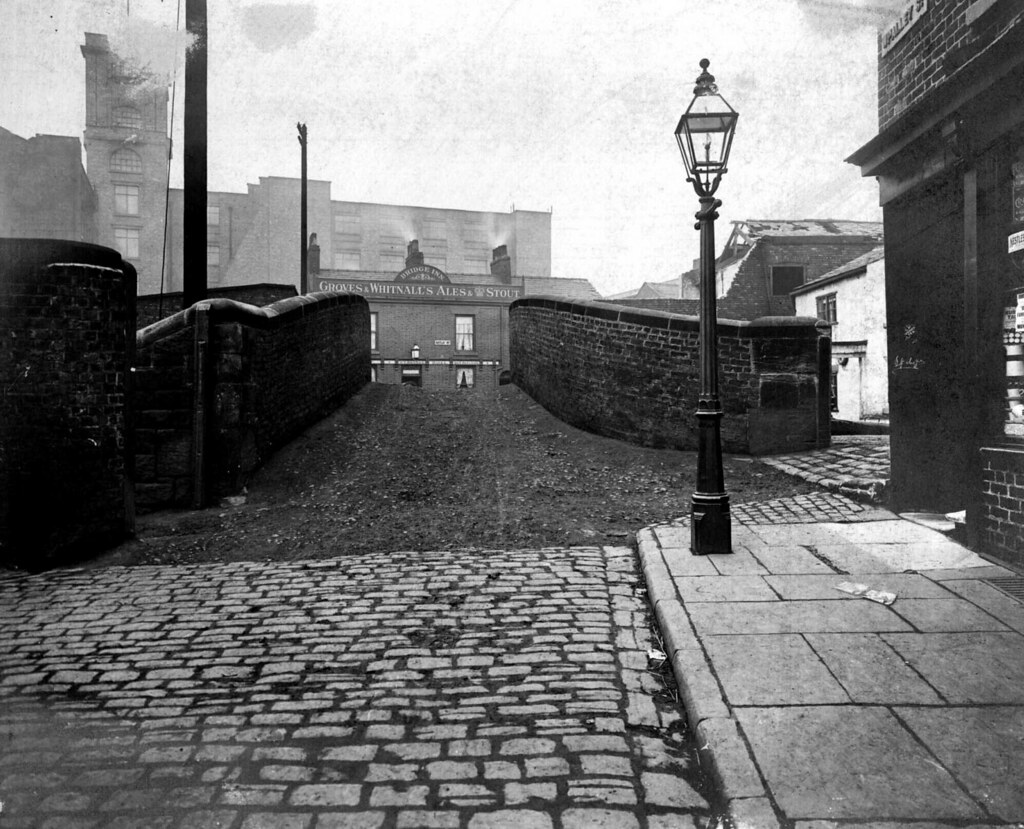
The bridge is in Ancoats, Manchester and is relevant to my piece as it is the dividing factor in-between the Bengal Tigers Gang and the Prussia Street Gang, as the Bengal Tigers take place on the left side of the bridge and Prussia Street on the right with the bridge acting as a sort of no man’s land where the gangs meet up and fight there since it separates both of their territories.
The Streets
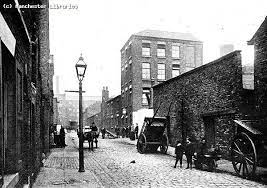
The streets of Ancoats were in horrible condition, with Ancoats being the last city in England to get a proper sewage system so there was not a good way to dispose of fecal matter, and it was said that their would be 1 toilet for 100 people to share. As Ancoats was a very filthy city there were no high class people living there, and if there were it was very few of them as Ancoats was created to have many mills built and operated there, and many working class individuals to work in those mills.
The streets would have many pickpockets as money was tough and sometimes people wouldn’t even have jobs, so everyone did what they needed to in order to keep themselves alive. The police, otherwise known as Peelers or Bobby’s didn’t get involved much if they didn’t have to. If there was a massive ruckus on the streets they’d step in and resolve it however they wouldn’t get themselves involved with Scuttlers if they didn’t have to, if the Scuttlers were fighting among themselves, fine, but the moment things get out of line and someone introduces a weapon to the mix that will threaten someones life the police would take action and arrest that individual, and usually it was better to just let yourself get arrested instead of fighting back as that’s only going to worsen your position.
The Pub
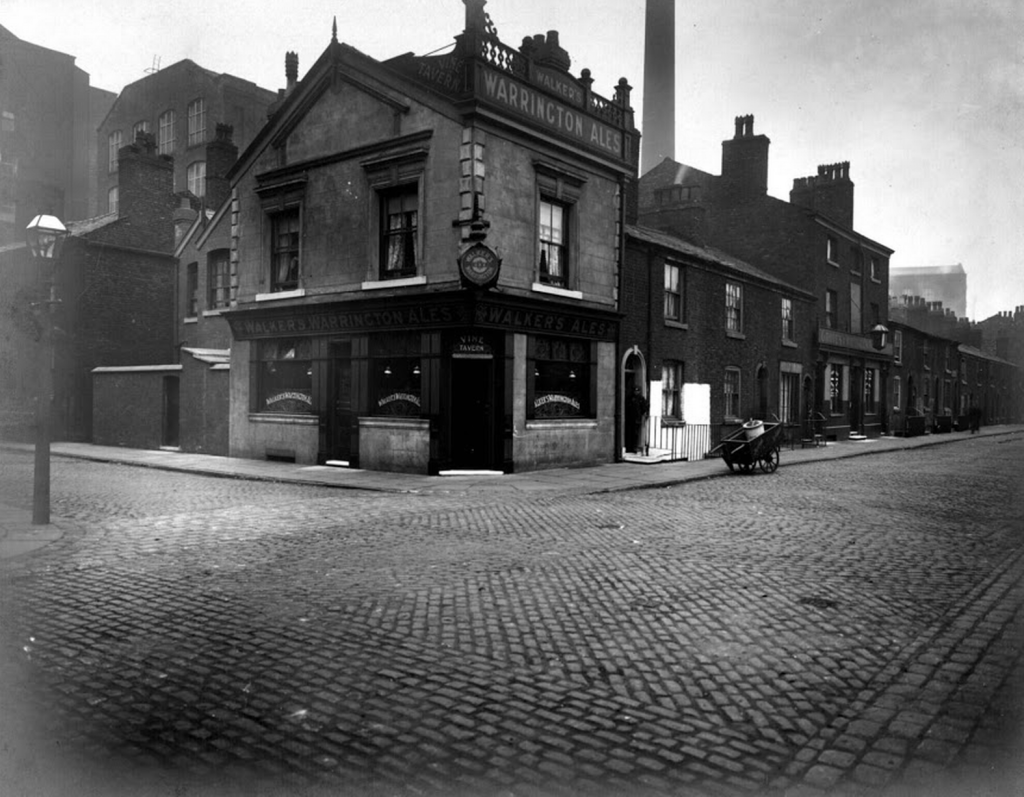
The pubs in the 1800’s were divided into separate rooms in order to cater for the different social classes that would go there to meet their friends, co-workers, business clientele and even gang members. Furthermore this is highlighted more from visual research that I have completed such as Peaky Blinders.
The average price for 3 pints of beer was 10.5 pence, it was mainly the working class that drank alcohol more than the other classes. This is because they had hard laboring jobs so they “drank for the pain” as alcohol is known to be a sedative – https://strathprints.strath.ac.uk/63806/1/Hands_Palgrave_2018_Drinking_In_Victorian_And_Edwardian_Britain.pdf (page 161)
The Mills
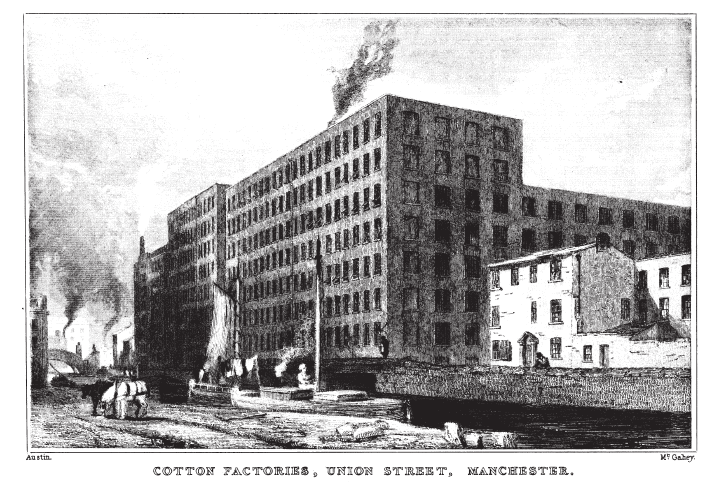
The mills were extremely loud with all the machinery at work in the background, and because of this, it was very difficult to have a normal conversation with your fellow workers over the “thunderous roar of machinery in the background” however this did not stop them from conversing as they would all soon learn how to become adept lip readers. This would later on become useful as being exposed to that level of noise on a daily basis would eventually lead to deafness in the workers.
Due to the mills not having any electrical appliances such as fans, the mills would quickly become quite hot during a hard days of labor reaching up to 30°’C. The reasoning for letting the mills get this hot is that “Textile mills needed to be kept hot to stop the thread from snapping” however these were extremely harsh conditions for workers to work in as they were not even allowed to open a window.
Diseases unfortunately were common as well within the mills as they were mainly caused due to the cotton particles left from the machinery which was unavoidable if you work in a mill. These cotton particles would eventually lead to diseases such as, Byssinosis which was a lung disease “Byssinosis can cause symptoms like asthma or more permanent lung damage similar to chronic obstructive pulmonary disease (COPD)”. Byssinosis wasn’t the only disease that you would get from the mills, you could also get an eye infection, mouth cancer, and even a groin cancer.
Children were expected to work at the mills as it was ‘common’ some would even expect children to be working “from as young as 4 years old.” Orphaned children, or children from poor families would be taken in as a “mill apprentice” as they were took in and being sheltered and fed by the mill owners they were not paid because the mill owners believed that “basic food and a place to sleep was payment enough”. If that wasn’t bad enough, many children would sadly loose their lives in tragic accidents from being crushed by the machinery, as they were much slimmer and smaller than the adults, they had special jobs that only they could do like going under the machinery and cleaning it while the machines were still moving as usual. And there was hardly time for rest as their work hours would span from 12-14 hours per day. If the children were caught taking a break, passing out due to exhaustion, or were late to work, they would get heavily punished by being beaten, having weights put around their necks and even having their ears nailed to the tables and there was no way around any of it.
Workers could be fined over the smallest of things such as; looking out of a window, leaving the room, being late to work, or even just talking. The mill owners would not stop there either, they would actively try to catch workers out by changing the time on the clocks to fine them for being late when they actually weren’t, just so they owe a extra little bit of money to the mill owners. Children could also be fined, meaning child apprentices who didn’t even get paid anyway could also be fined, and as they didn’t earn any money they would pay off their fines by working through “overtime” which meant they would be working for over 14 hours per day.
The mills were EXTREMELY dangerous to work in (obviously), they were so dangerous in fact, that it wasn’t rare for mill workers to loose limbs, form fingers to whole arms or even loosing their lives entirely. “Up to 40% of accidents dealt with at the Manchester Infirmary in 1833, were factory and mill related” many incidents happened back to back on the same shift. “One young girl, Mary Richards, aged just 9 or 10, was tragically crushed to death when her apron strings got caught in the drawing frame she was working at, dragging her into the machine.”
Most mill owners were tyrants that only cared about how much money they made, without any concern for their workers that were loosing something of theirs everyday, being limbs, hearing or their life. However there were some mill owners that actually cared about their staff and even “wanted to create a better working environment for their staff.” a good example of a mill that had a owner like this was “Quarry Bank Mill in Cheshire provided better housing for its workers and even gave access to a doctor. This meant that its workforce was generally in better health than those at other mills.”
Due to the immensely dangerous and appalling working conditions for their workers, the mills started attracting attention from social reformers. reforming the mills was part of a “wider landscape of social reform” which, rightfully challenged the governments negligence towards child workers and the uncaring, ruthless life of the average mill worker. “A number of acts of parliament were passed in an attempt to ease some of the pressure put on workers, particularly children”
“In 1819 the Cotton Factory Act was passed, stating that mills could only employ children over the age of nine and restricting the working day to 12 hours.” even though this was good news, it still left children with 12 hours of work per day which was still too long, and didn’t even touch on the fact they still have to work within terribly dangerous conditions. As this act was not enforced by inspectors some mill owners still abused child labor.
“In the following years, further factory acts were passed bringing in new stipulations. The new acts stated a set amount of education per week should be provided to child workers, they reduced working hours of women and children under 18, raised the age of child employability to 11 and made it a requirement to install protective guards around machinery in an attempt to reduce accidents.”
All quotes taken from-
By (Sai Haranath)
Lodging House
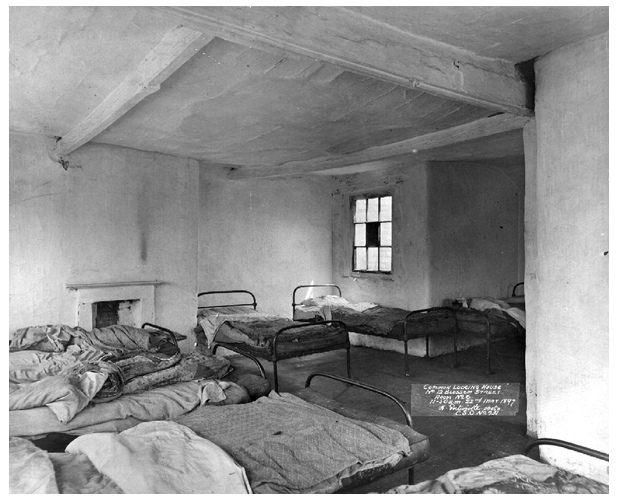
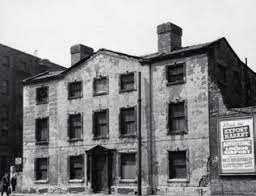
As a result of rapid progression throughout the Industrial revolution, “Victorian slum housing was quickly erected to house the mill workers” it was found that more often than not whole families would sleep in one room, or with complete strangers. It got as bad as 15 people sleeping in one cramped room.
For those who had no money, there was a free very basic accommodation as workhouses, which could be found in the ‘workhouse casual ward’ or ‘charitable refuges’ however the most common option was “the common Lodging house, also known as a Doss-house or Kip-house” Although not free, usually costing six pence, or four pence, the Lodging homes would not demand any hard labor of those who live there in order to have some food and a bed.
All quotes taken from –
https://www.workhouses.org.uk/lodging/
The Dispensary
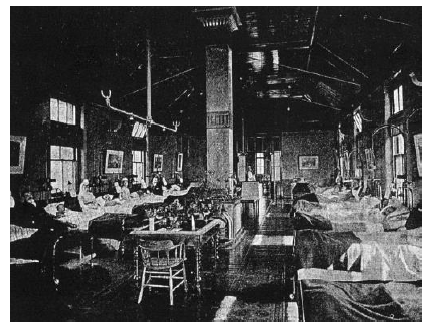
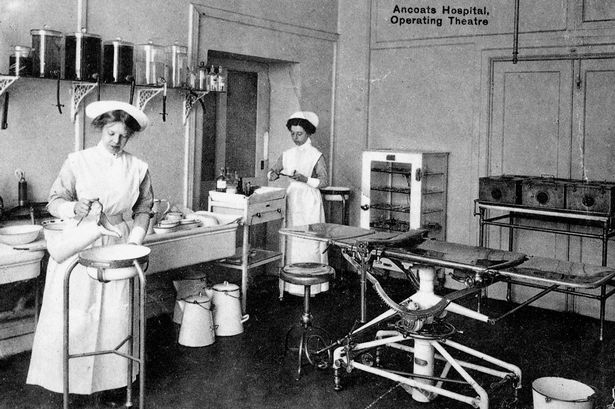
There were hospitals around Britain in 1876, however the matter of fact is the poor would be more common to go to the local infirmaries, whilst the rich would pay a doctor to go to their house. Infirmaries were usually quite filthy as there were always sick people around and people who needed surgery would be having it done without any anesthesia which would often result in infection within the wound.
Hospitals and Infirmaries within those years was not viewed as a ‘Place of Healing’ instead it was viewed as a ‘Gateway of Death’ as if you were forced to go to an infirmary due to any diseases or wounds, it was quite likely you’d end up with more diseases or infections in your wounds. Very few surgeries were performed as the “success rate was extremely low and prior to anesthesia extremely painful”. this was due to the underdevelopment of healthcare, compared to what it is now.
All quotes taken from –
https://logicmgmt.com/1876/overview/medicine/hospitals.htm
Street Life
The living conditions in 1880s Ancoats was extremely poor, unsanitary and dangerous due to Ancoats not having a sewer , many people moved to Ancoats from the country side with all the job opportunities it brought up. However, with so many people coming into Ancoats all at once housing had started to become a problem “The old back-to-back houses were thrown up to accommodate a massive influx of workers who flocked to towns and cities from the countryside hoping to fill the newly created jobs the Industrial Revolution had created.” Ancoats back in the 1880s could only be described as “back in the 1880s, Ancoats was a horrific slum. It was one of the world’s first industrial suburbs – and by all accounts it was truly hideous” – (written by I Love MCR, on I*heart*MCR)
Due to new economic opportunities during 1837 – 1901, the Victorian era where Queen Victoria ruled, also known as the ‘Industrial Revolution’ and the time in which the steam engine was invented, “boosted life expectancy and quality of life” however, because of this the already existing social class divide became even worse. The rise of the middle class was due to the outcome of skilled labor that came with the Industrial revolution, the middle class was mostly consistent of “newly educated experts in industrial technologies, along with other college-educated professionals like doctors, engineers, and lawyers”. The middle class was in between the upper class and working class, the working class was the more common out of the bunch, being mostly made up of mill workers and making just over minimum wage.
quotes taken from –
https://study.com/academy/lesson/19th-century-england-society-social-classes-culture.html
Work Life
The most common form of work was the mills, paying just over minimum wage, honestly it wasn’t a job worth having as you are putting your entire life in the hand of machinery and you could die, or loose limbs or even develop very ad, and extremely fatal diseases every day that you work there. The mills were literally death itself, if it wasn’t the machines that took your life it would be the life threatening diseases you’d get from the cotton, oil and grease. However bad the mills were, the infirmaries weren’t much better as there would be a constant stream of sick people and you could get any diseases at any moment, any infections from the dirty work environment and on top of that, the pay was worse than the mills. whilst neither the mills, or infirmaries were good and safe work environments there was not much hope for the working class to get a good paying job without risking their own lives every day.
The middle class however got to work as doctors, engineers, teachers, clerks, lawyers as well as government officials and civil officers, for the most part these were much better paying jobs and much safer at that which meant that the middle class, while not being rich or royal, still lived well and comfortably not having to risk their lives everyday at a job they don’t even like. And even though working conditions weren’t perfect, hospitals as an example had separate rooms to avoid the spreading of disease, that did not help in the slightest as all the rooms would be filled to the brim anyway. comparing this to the infirmaries its better but not by much as n infirmary would not be nearly as big in space as a hospital, and would have one waiting room for everyone and if an operation was needed, even if the operation was successful which was highly unlikely, there would still be a very high chance that the wound on the person that got operated on would get infected which is just as bad, and this was once again because of the poor working conditions as the infirmaries and hospitals would be extremely filthy all the time.
The 19th century gangs & Real Bengal Tigers
The Bengal Tigers were very much real, like in other media other gangs such as the Peaky Blinders as an example are all based off, real people, and real gangs. However what you watch or read in media about these gangs for example the Peaky Blinders TV show twist the facts to make an intrigued audience in order for them to continue watching and for the producers to make money., therefore, they are not entirely a reliable source of research. Of course however, there are books such as “The Gangs of Manchester” that’s main purpose is to educate the curious minded about what it was really like, what these gangs were truly like. The Bengal Tigers, the gang that the play “Scuttlers” by Rona Munro is a very real gang that depicts real events in the history of the Bengal tigers with some events and characters being fiction along the way to make an intriguing story.
The Bengal Tigers were based in Bengal Street, in Ancoats Manchester were armed with knives and belts, they would wrap their belts around their and putting the buckle between their fingers for extra damage when punching. They were very violent and “Ready to wage ferocious turf wars with rivals.” The gangs primary objective and intent was not to kill, but to make serious injury as well as to “maim and disfigure” But, however rare that fatalities were, the chances were never zero, although serious wounding was to be expected. Fighting back in those days was more commonly known as ‘scuttling’ and that is were the name and term to refer to gangs as ‘Scuttlers’ came from. As more scuttling came about and the violence getting out of hand the public panicked whilst the “authorities struggled to contain the violence.”
These gangs weren’t ran by adult men, in fact most if not all the members in a gang were teenagers and young adults, young men and women alike. They would soon start to be referred to as ‘youths’, and the word had no correlation with childhood, teenage years or adulthood at that time, surprisingly it was a word used to describe these scuttlers in criminology “according to Jon Savage, author of Teenage: The Creation of Youth 1875-1945”.
Scuttlers would develop an interesting and extravagant style of dressing, “Scuttlers looked different from other young people. Their clothes and hair styles marked them out,” (says Davies) They would wear patterned or colored scarves in order to distinguish themselves from other gangs but to also say that ‘I’m in this gang so you better watch out’. The most treasured possession of the Scuttlers was their belts, as it was not only used for fighting, but for display as well. Their unique style of dressing was remarkably important because it would mark them out from the crowd and to the press.
The female Scuttlers of the time were viewed as very visible and bold, this was most likely due to the fact that women were viewed as weaker and inferior than men in those times, but being part of a gang would put them in a position of power and make them cocky and egotistical. This was mainly because the quintessential woman at the time would either stay at home and look after the children or go to work. “Female Scuttlers socialised in large groups, and social commentators of the time were struck by how visible and how ‘bold’ they were,” (says Davies) They sometimes took part in the fights between rival gangs, although they were very involved on witness intimidation and police assault.
The Scuttlers were always demonized by the press and politicians out of fear of these ‘juvenile delinquents’. This was because at the time, crime rate was rather high and they wanted to take it into control therefore they wanted to influence the common man/woman into coming forward with any information they had to take down these criminals.
The Scuttlers were not scared of the police, or jail time, that did not deter them from scuttling. Devine reported that “their conduct in the dock at the police court was most flippant and callous… the youths laughed and turned round to wink at friends in the gallery.” it was said that by 1890’s their were more “youths being held in strangeways for scuttling than any other offence” (said Davies). Even the lengthiest sentences and forced hard labor failed at deterring youths from scuttling.
Scuttling had started to decline by 1890’s as ‘working lad clubs’ had started to take root in the streets of Ancoats where it was a large area for scuttlers. The clubs struggled to recruit lads who were already in a gang however it was easy to recruit 11,12 and 13 year old’s who weren’t affiliated with any gangs to keep them off the streets, and out of the gangs. These clubs were “providing facilities for football, rugby, boxing and athletics, as well as indoor entertainment” (says Davies) and due to the newer children being kept out of the streets and taken in by these clubs, gangs ran out of children which they could recruit, steadily slowing down the ‘Scuttling’
“The lessons for today are obvious – if you cut youth services, you’re leaving young people more vulnerable to gangs. It’s as simple as that.”
All quotes taken from –
Knife Crime
HOW HAS IT PROGRESSED THROUGH TIME AND WHY? TALK ABOUT WHAT AFFECTS IT IN THE PRESENT – SOCIAL MEDIA, GANGS, PEER PRESSURE.
Knife crime is an important subject to research in order to help me improve my piece as one of the main reasons as to why knife crime is prevalent is due to gangs. many gangs have influence over poor people, especially in poverty as they commit crimes together such as armed robberies, grievous bodily harm and sometimes even murder. The reason why knife crime effects poor people most, specifically young poor people, is due to the fact that their minds can be easily molded and almost peer pressured into joining something that makes them feel like someone.
in contrast to many beliefs, research has shown that whites are more likely to be carrying a knife than any other race. – “White pupils are more likely to say that they carry a penknife than young people from black or minority ethnic groups (26 per cent compared with 20 per cent).” One of the main reasons for this is due to that blacks and Asians are the minority in schools therefore the ratio is in that favour. as well as this, Blacks and Asians are more likely to be targets of hate crimes as murders in economically deprived areas are where these cases take place.
“According to the 2005 OCJS, males aged 10 to 25 years were almost twice as likely to
have been the victim of an assault without injury than females of the same age.” From this quote, i can infer that the main perpetrates for those carrying knives are of men. People carry knives so that they can feel safe, defend themselves or if they are part of a gang. However, from attending a knife crime lecture, a story that was told was that someone who carries a knife is more likely to get killed by their own weapon, meaning that most of the time, those who are victims of knife crime assaults have been assaulted by their own weapon, not the assaulter’s.
From this research, i now understand properly the intentions of those who do carry knives which i can apply to a character background story as to why my character might have joined the gang “Bengal Tigers”.
All quotes taken from-
Home/Family Life
Working class living standards
The life of an average working class person was a hard one at that, whilst spending long, exhausting hours working laborious jobs only to get paid enough to pay rent and buy food life certainly was not easy. without the luxury of electricity, gas, running water central heating (Electric or gas) or even lighting, that would make it impossible to do stuff at night time so once night came around it was bed straight away, and varied between seasons, with winter getting night much faster.
in cottages there would be an outside toilet consisting of one bucket that would be shared between a row of cottages. It was a “bucket dug into the ground where earth was used to cover waste material.” once full someone would empty the bucket to be emptied somewhere else, however, urine was collected in tins and used “in the spinning and weaving industry.”. When it was dark and cold, having a pot chamber in the bedrooms was a lifesaver for families to avoid having to go outside in the cold dark, however this meant that it had to be emptied in the morning.
The only source for heat to cover the entire cottage was burnt wood or burning coals. “At night, a warming pan would be filled with hot coals and placed in the bed, to be removed before the family went to sleep.”.
Since there was no central heating whatsoever, it was common to wake up in a cold winters morning to having ice in the inside of your windows. This horribly physically draining lifestyle was when mortality rate was at its peak, during the winter. This was due to the “poor diet, and lack of adequate hygiene.”.
Free schooling was first introduced in 1870, before that you’d have to pay for education, and during the 1880’s education was made compulsory. Before all this, children stayed at home and helped with normal day-to-day tasks, and they would only receive education in Sunday schools “and this was often the only structured education they received”.
Even with all the bad and horrible situations these people have to deal with on a daily basis, its surprisingly, not all bad. These communities would stick together like a tight knit family to support one another out when they could. When times got rough or a tragedy occurs, such as someone loosing a family member, these communities would come together and help each other out without any other motive, they help out just out of the goodness of their hearts.
Every Monday was the day that the women had to do the washing up. As there was no running water, they must go fetch water from a well and bring it back to the house to do the washing up, Monday was the only day they could do this, as it was an exhausting task depending on how far away your house was from a well. once the water was brought back from the well, it was heated up using a ‘set pot’ this was “a large metal pot that a fire would be built under, before being poured into the washtub.” as the water was boiling you would grate a bar of soap so that the soap flakes would fall into the boiling water and dissolve into the water.
To get clothes and linen washed it was a more difficult process as you’d need two other tools for the job. These tools are; a rubbing or washing board and a posser, “Possers came in a variety of different shapes, including a flat disk, a metal dome, and a disk with three or more little ‘legs’. All types were mounted on a long wooden handle.” the posers use was to move the water around the tub, as it was boiling water you would not be able to use your hands or else you’d get scolded, making sure that the soap gets to all the dirty parts of the clothing so that all the dirt and muck come out of the clothing. There would be two loads of washing done in one day with the same barrel of water, coal was limited and a valuable recourse back in those days, so all the white and less dirty clothing was washed first and then the much dirtier work clothing last. The rubbing board is a “rectangular wooden frame, which holds either another piece of ridged wood, or a piece of textured, ribbed glass.” the use of this piece of equipment was to push the last bits of soap and dirt from each individual piece of clothing. After taking the clothing out of the water you’d squeeze all the excess water out and then use the rubbing board. The next step is rinsing the clothes, the clothes would be put through a mangle to squeeze out all the rest of the water so the clothes would dry as quickly as possible. “The wet clothes were fed in one side and with the turning of the handle, they would be forced through the narrow gap between the rollers, squeezing out the excess water. This was collected in the washing tub for washing the second load. The gap between the rollers could be adjusted and the same item of clothing, or folded sheet was passed through the mangle several times. “
To dry the clothes the families would have a string that they’d string across the road and hang up the washed clothes on it, this was allowed due to the ‘hanging rights’ every household had. they hung their clothes outside since it would dry much, much faster out there instead of inside the house, because again, they had no central heating. “With Monday was washday, Tuesday was ironing day,!”. A flat Iron would be heated up and women would spend the whole day ironing clothes. All in all, its safe to say that these two days were the most physically draining of the entire week for women.
Because the working class folks didn’t make much money their diets were generally quite poor, resulting to have to eat the same food again and again ” there wasn’t a lot of variety in the food they ate.”. Each cottage would have their own small garden in which they’d grow their own vegetables, however depending on the quality of soil that they had, or the weather and season their vegetables would grow either very slowly or normal speed, and varying on location they might be forced to grow other kinds of vegetables due to the soil and weather. The people depended a lot on the food they grew as it was a huge part of their day-to-day meals, however it would be a seasonal harvest, so even though it helped it didn’t last all that long unless they had small portions of food everyday. Not only would families own their little personal gardens, but they also had a pig and a few hens. “Pigs were a popular choice of animal to keep because they are omnivorous, eating more or less anything given to them”. The pig would be great for these families as the old saying goes “you can eat everything but the squeal” meaning that you can eat pretty much every part of the pig apart from the bones, meaning that you would waste no food. Hens would provide eggs and meat, so that’s why they were also quite common to keep. Due to not having electricity to power a fridge in order to preserve food, food had to be eaten before it went off so that no food went to waste.
All quotes taken from-
https://www.mylearning.org/stories/domestic-life-in-a-19th-century-weavers-cottage/1116?
The Research of Violence
A new VCU Lab (Virginia Commonwealth University) wants to figure out what is the cause of violence, the psychological factors of it and if violence acts as an addiction. Like drug or alcohol addictions this can be treated. Researcher David Chester, Ph.D., worked together with Nathan DeWall, Ph.D., to find out the roots to this violent nature us humans have and why we still have it after centuries of evolution.
The most basic outlook on violence is the anger, or fear factor, for example, if some other person does something that enrages you you might want to physically or emotionally hurt them as an offensive action, however, if another person is threatening you or your life you would probably retaliate with violence out of fear, in order to stay alive you would use violence as a defensive action to protect yourself. Violence is shown to be triggered by a surge of negative emotions that force the person in question to act offensively or defensively.
“Our lab has really shown that that’s true — negative emotions are there,” Chester said. “But positive emotions actually also play a pretty big role in aggressive behavior as well. So aggression can feel good. And that pleasure — and the associated, what we call hedonic reward — is a really potent motivating force.” – (David Chester) What Chester means by this is that during the event of a violent situation where you might be beating someone you will start to feel a ‘tingly’ feeling that feels all the better the more you do it. That’s the adrenaline kicking in giving you a rush that you don’t often get on a normal day-to-day basis. this surge of adrenaline, and the sense of power you get from this action will sometimes trigger the serotonin hormones which basically just make you feel good, this mainly happens from an offensive position as you chose to do this, when doing it out of a defensive position you don’t really want to be there or do that.
A situation where you might get a rush of adrenaline and serotonin is by getting revenge on someone that has wronged you, Chester said. “It’s also about how it feels good sometimes to get revenge on someone who has wronged you or who you perceive as having wronged you.” The positive sensation that Chester has found, also “works on the same neural circuits as other addictive behaviors, such as cocaine, gambling and engaging in risky sexual behavior.”
Chester plans to launch a trial with a drug called Naltrexone, which its simple purpose is to block pleasure. It is mainly used to treat alcohol addictions and others of the sort, however this time the drug will be used in order to test if the good emotions and feeling you get when taking part in aggressive, violent behavior can be blocked and so the action feels boring and stale.
“Emily Lasko is one of three doctoral students working in the Social Psychology and Neuroscience Lab. Her research focuses on the neurological connections between psychopathy, empathy and aggression.” Lasko has been studying brain scans of “people with psychotic traits” those traits might be connected towards the grey matter within the parts of the brain that process emotions.
“By gaining a deeper understanding of the biological markers of aggression, empathy and ‘dark’ personality traits, as well as understanding the ways in which such traits can emerge to be both maladaptive and potentially adaptive, we can be better equipped to develop early intervention strategies and rehabilitative programs for aggressive and antisocial behavior,” she said. “This knowledge will also facilitate efforts to target and foster potential strengths or adaptive features of the ‘darker’ personalities.”
The stereotypical ‘psychopath’ is thought of being some cold blooded killer that can manipulate people just as easy as they can kill others, however that type of thinking is not just in-comprehensively rude but also just wrong. A psychopath is commonly known as a person that has little to no empathy however they also have other traits such as charisma and “the ability to get what they want”
“There’s this notion of successful psychopaths, so think of like a CEO. Well, it’s not just that they’re walking around without empathy and that’s letting them get what they want. They also have these abilities to manipulate others. So that’s got to correspond to something in the brain,” Chester said.
The data acquired by Lasko suggests that psychopaths are more capable to easily adapt to different situations and have no problem manipulating people.
Alexandra Martelli, another “doctoral student” is researching and exploring the aggression between intimate partners. “Close relationships are vital for our well-being and overall happiness and when we have unresolved conflict with close others it can have devastating intrapersonal consequences on our health and well-being,” Martelli said. “Especially in relationships where one or both partners suffers from various psychopathology — such as depression, anxiety, addiction or alcoholism — which can put additional stress on the relationship.” (Alexandra Martelli)
“We’re really trying to explore what neural mechanisms, what brain processes are promoting and causing people to harm their romantic partners,” Chester said. “What we’re looking at is, that given that intimate partner aggression is kind of a unique flavor of aggression, it’s its own kind of thing. What is the brain doing to create that, as opposed to just being aggressive?” (David Chester)
All quotes taken from –
https://news.vcu.edu/article/What_is_the_psychology_behind_violence_and_aggression_A_new_VCU
Stage Combat
I have used this video as a source for ideas for the belt fight that me and Ruben have (Sean and Jimmy)
I deemed it too dangerous and unsafe to swing the belt like that using the buckle of the belt as its pretty heavy metal on the belts we used and so I decided to make the belt fight with the actual belt whilst using the buckle as a handle to hold the belt. I have to hit Ruben on the upper shoulders to give the impression i was hitting him in the face, and it needed to be fast as to stop the audience from realizing that I actually hit him on the shoulder and not the face, but also, whenever i used speed to hit him with the belt it would make the greatest snapping sound that everyone could hear. If we used the buckles not only would it not make that snapping sound, but i wouldn’t be able to hit him at all as it would cause too much damage. Another reason as to why I decided to not do it the way the guy does it in this video is because it looks too neat and experienced. In Scuttlers were only teenagers and young adults, were inexperienced in terms of proper combat so we fought like amateurs to convey across that we are only young and not actually experienced in the art of fighting, even though our characters fight everyday.
In terms for the scene 1 kicking scene i used this video as a starting point to improve and branch out from there.
This very quick and basic video provided insight on how to kick Ciaran whilst he was downed. However we practiced our kicks whenever we could, and whenever we had every one in, in order to get better at the kicking, and to get more comfortable so we can kick as closely to Ciaran as possible without actually creating contact with Ciarans body in order to avoid injury. Since Ciaran had a lot of clothes on at this point it allowed us to kick further away from him whilst looking like we are still making contact when in reality we were no where near him.
I have used this next videos “Experiment 1” to further develop the stabbing scene in Act 2 Scene 14
The first experiment of this video was great for giving ideas for Georges stabbing. Since George (played by Saeem) is supposed to be a kid who became the leader of a gang due to sheer luck, and has no experience in fighting or with dealing with knifes so when Thomas (played by Alex Morgan) pulls out his knife George has no clue what to do, so he grabs Thomas’s knife holding hand and has no clue what to do next, so Thomas kicks George in the groin downing George which is when Thomas turns and slashes Joe who is trying to get past and goes in for the tab on Georges chest. Some of the movements in this video are utilized, but much more maturely since they are just teenagers. As a little side note the scene had to happen very fast so we couldn’t over complicate it with moves.
References
I Love MCR. (14 March 2019). How Ancoats progressed from an actual sh*thole to one of Manchester’s most sought after districts. Available: https://ilovemanchester.com/how-ancoats-progressed-from-an-actual-shthole-to-one-of-manchesters-most-sought-after-districts. Last accessed 29/05/22.
Richard Patterson. (16 July 2003). The Cost of Living in 1888. Available: https://victorianweb.org/economics/wages4.html. Last accessed 28/05/22.
Ben Johnson. (Unknown). The Great British Pub. Available: https://www.historic-uk.com/CultureUK/The-Great-British-Pub/ . Last accessed 28/05/22.
Thora Hands (2018). DRINKING in VICTORIAN & EDWARDIAN BRITAIN. Glasgow, UK: Palgrave Macmillan. 161.
HISTORIC ENGLAND. (16 November 2021 ). 9 Interesting Facts About Life as a 19th-century Mill Worker. Available: https://heritagecalling.com/2021/11/16/9-interesting-facts-about-life-as-a-19th-century-mill-worker/#:~:text=They%20would%20work%2012%20%2D14,their%20ears%20nailed%20to%20tables.. Last accessed 29/05/22.
Unknown. (Unknown). Common Lodging Houses. Available: https://www.workhouses.org.uk/lodging/. Last accessed 29/05/22.
B. Malhero. (1999-2017). Victorian Hospitals. Available: https://logicmgmt.com/1876/overview/medicine/hospitals.htm. Last accessed 29/05/22.
unknown. (unknown). 19th Century England: Society, Social Classes, & Culture. Available: https://study.com/academy/lesson/19th-century-england-society-social-classes-culture.html. Last accessed 29/05/22.
Louise Rhind-Tutt. (May 3, 2017). Manchester’s Scuttlers: the violent street gang that pre-dated the Peaky Blinders. Available: https://inews.co.uk/light-relief/offbeat/manchesters-scuttlers-violent-street-gang-pre-dated-peaky-blinders-62476. Last accessed 31/05/22.
Chris Eades Roger Grimshaw Arianna Silvestri Enver Solomon (2007). ‘Knife Crime’ A review of evidence and policy. 2nd ed. King’s College London: Centre for Crime and Justice Studies. p23-25. https://www.crimeandjustice.org.uk/sites/crimeandjustice.org.uk/files/ccjs_knife_report.pdf
Unknown. (Unknown). Working Class Living Standards. Available: https://www.mylearning.org/stories/domestic-life-in-a-19th-century-weavers-cottage/1116?. Last accessed 03/06/22.
Brian McNeill. (AUG. 17, 2017). What is the psychology behind violence and aggression? A new VCU lab aims to find out. Available: https://news.vcu.edu/article/What_is_the_psychology_behind_violence_and_aggression_A_new_VCU. Last accessed 02/06/22.
Nick Drossos Defensive Tactics. (Jul 21, 2009). Using Your Belt to Fight. Available: https://www.youtube.com/watch?v=6pKxD6Ecl9Q. Last accessed 03/06/22.
ExpertVillage Leaf Group. (Oct 25, 2008). Acting Tips: Stage Combat for Plays : Ground Kicks in Stage Combat. Available: https://www.youtube.com/watch?v=PlkrdGWPLJM. Last accessed 03/06/22.
UF PRO. (Feb 24, 2019). Knife vs Bare Hands – A Reality Check. Available: https://www.youtube.com/watch?v=GBBahcNMSDI. Last accessed 03/06/22.
 NickForstmanClarendon